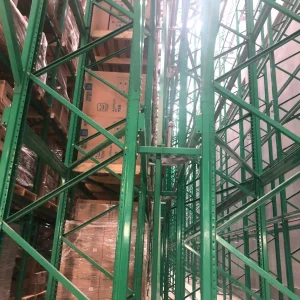
Gravity Flow Racking System Introduction
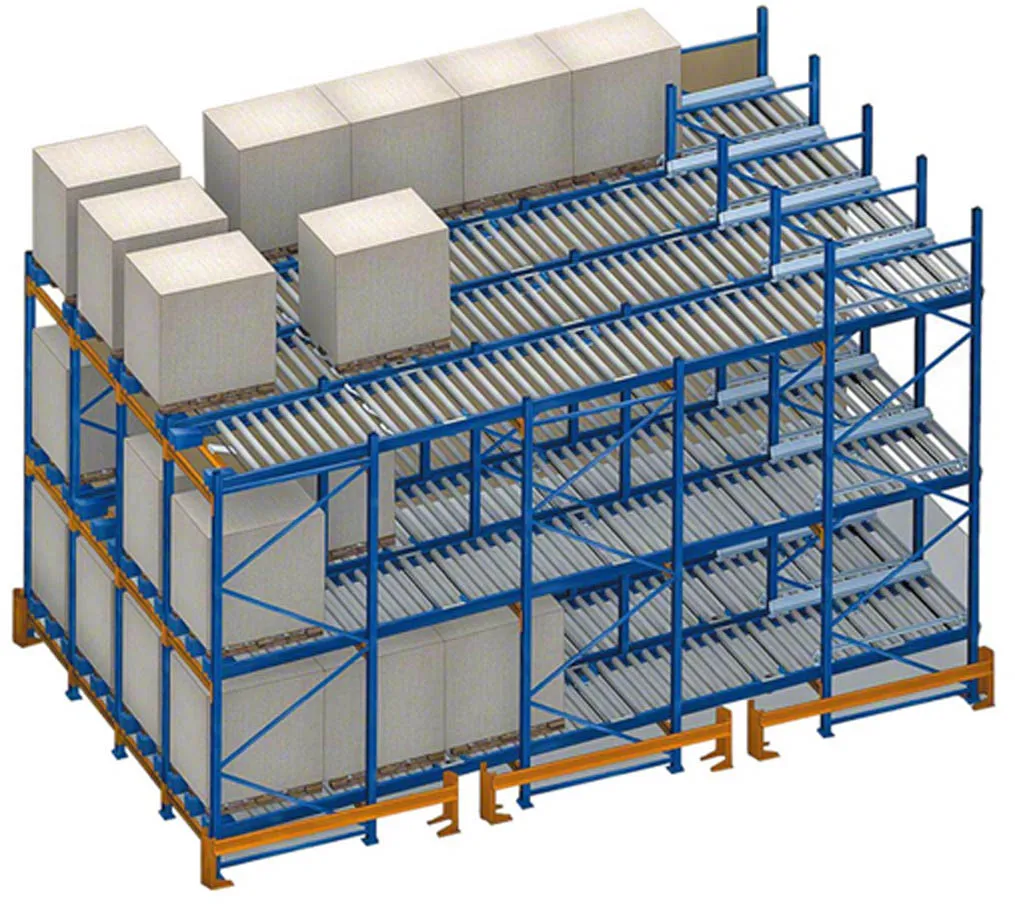
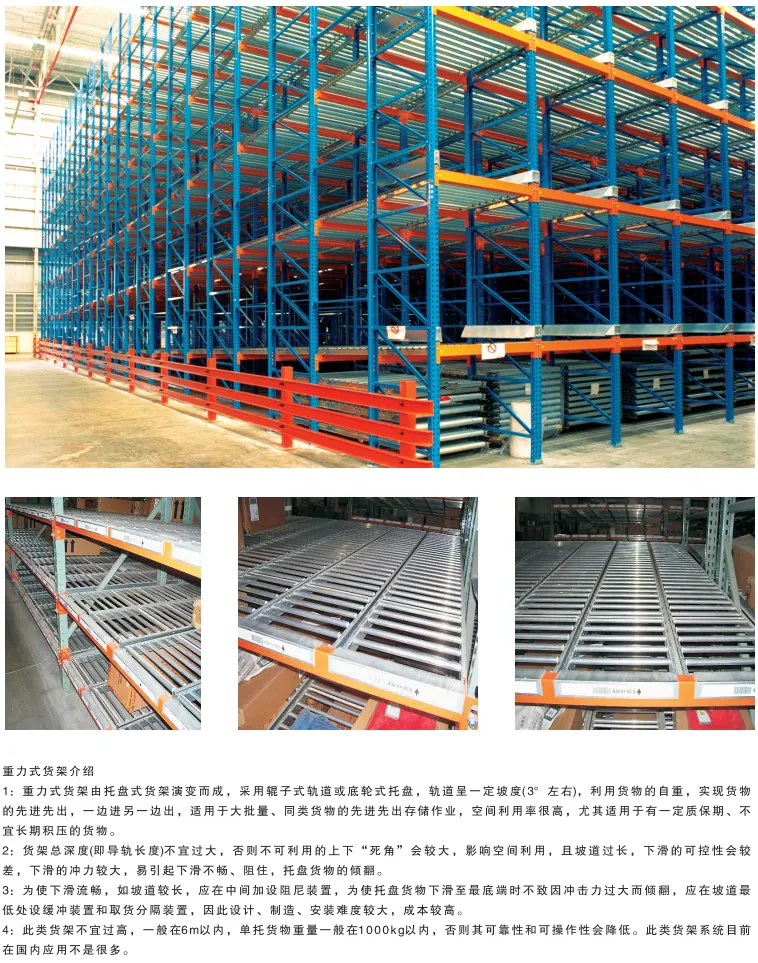
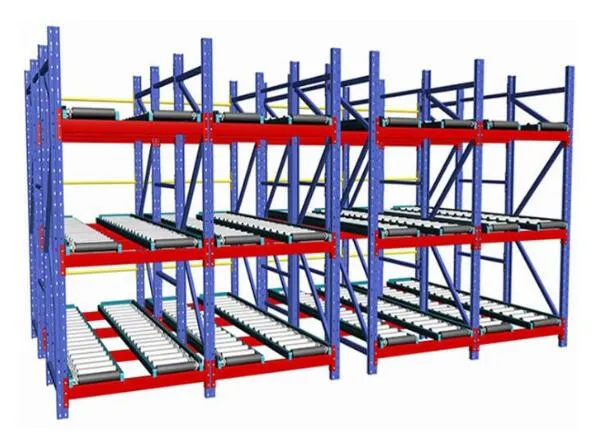
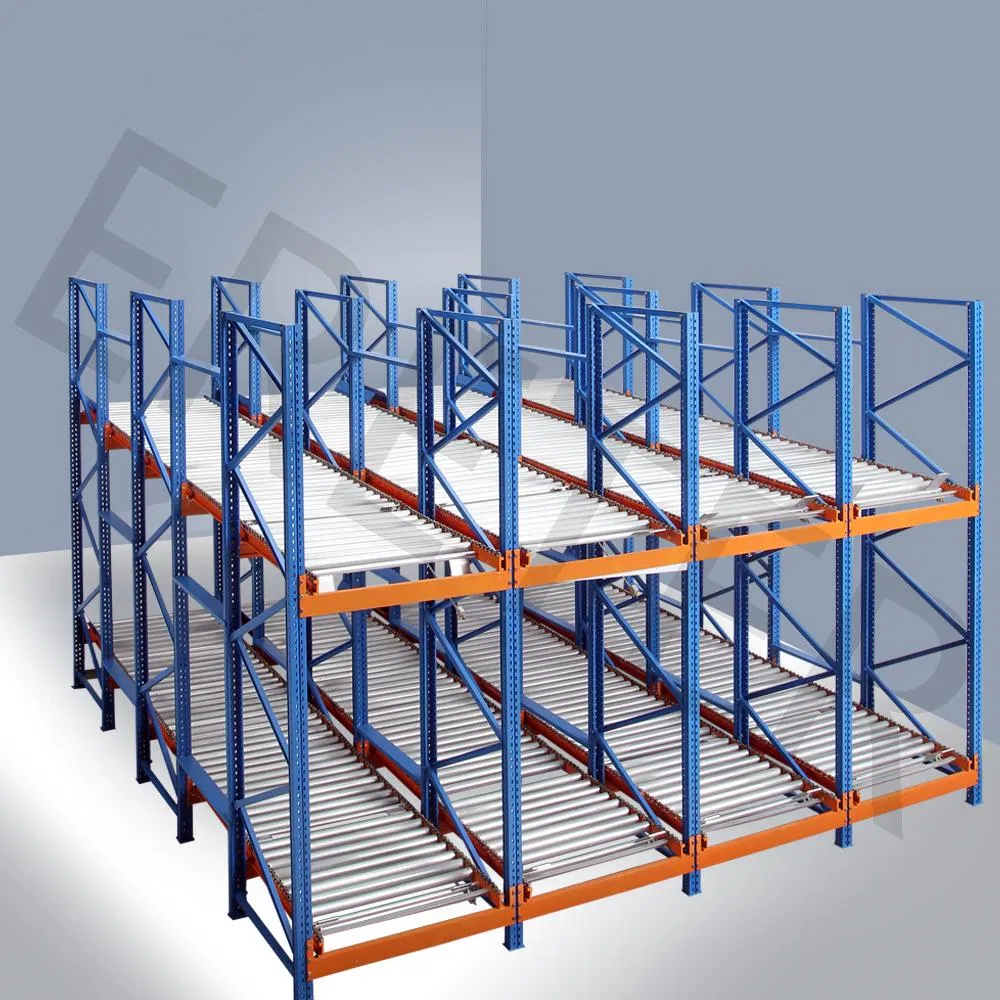
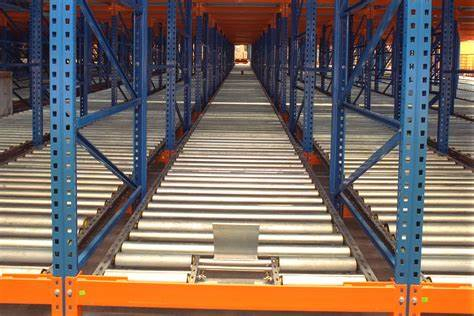
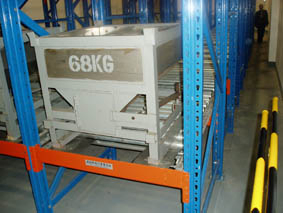
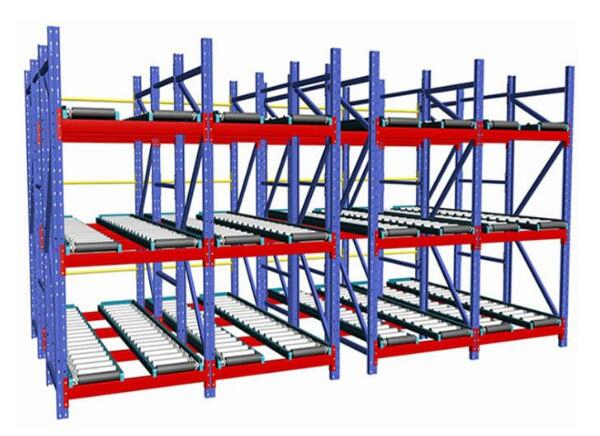
Gravity Flow Racking is a high-density, dynamic storage solution engineered for exemplary FIFO (First-In, First-Out) inventory management. It employs inclined roller tracks, allowing products to glide from the loading to the picking end using natural gravity, minimizing manual handling and enhancing efficiency.
1. Structural Design
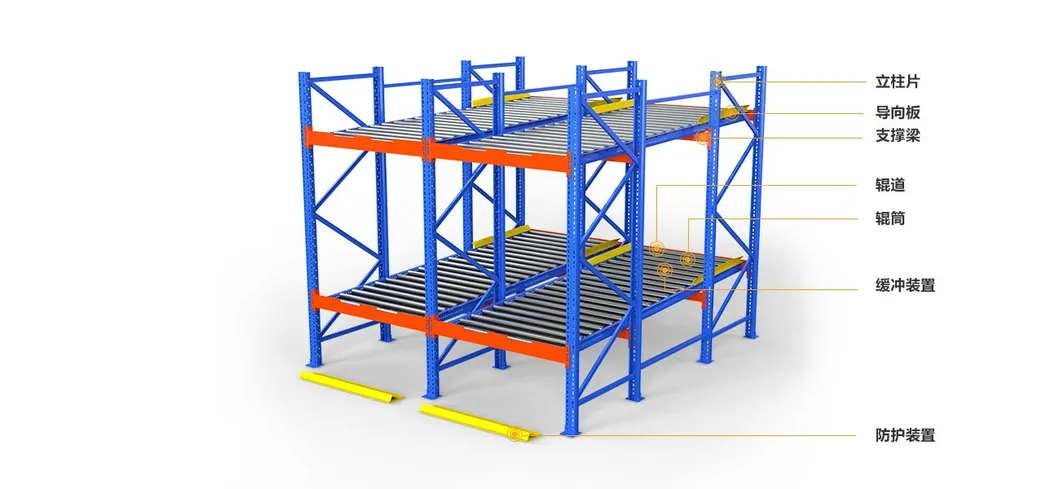
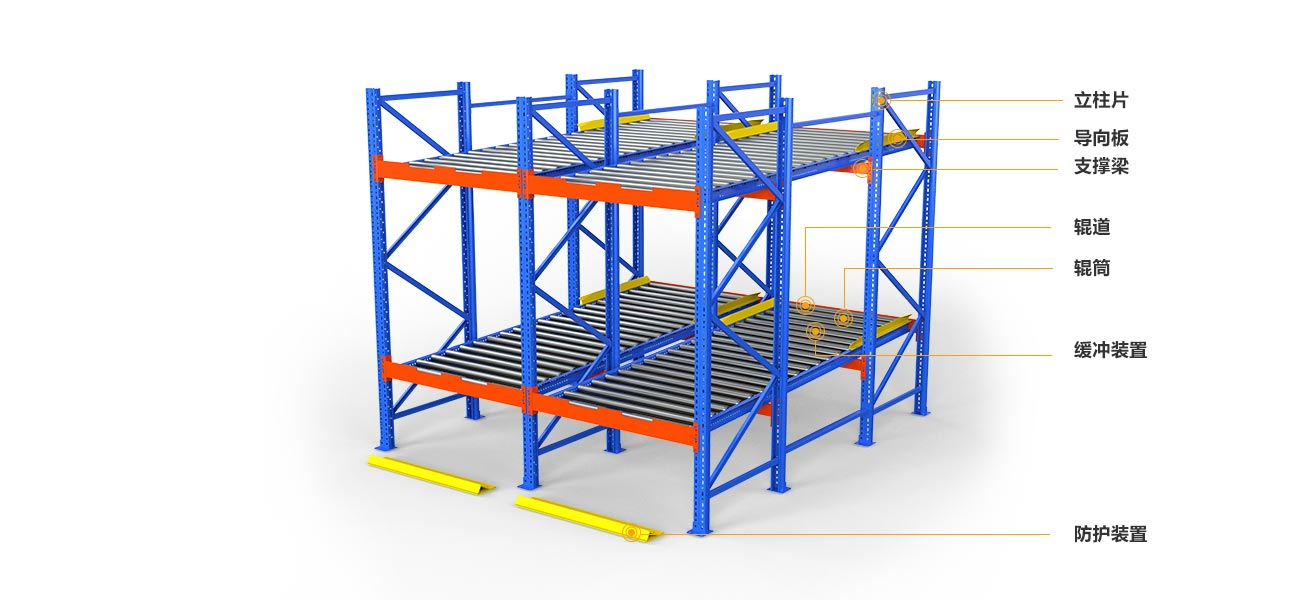
- Roller Tracks: Designed with inclined steel or polymer rollers with low-friction bearings.
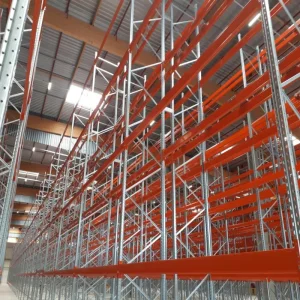
- Frame Structure: Robust steel uprights and beams for unyielding support.
- Braking System: Sophisticated speed controllers and wheel brakes for movement regulation.
- Loading/Unloading Zones: Optimized designated entry and exit points.
- Material: Galvanized or powder-coated steel for corrosion resistance.
2. Key Advantages
- High-Density Storage: Eliminates aisle gaps to maximize space for homogeneous SKUs.
- FIFO Compliance: Crucial for perishables or time-sensitive goods.
- Labor Efficiency: Reduces forklift travel and manual picking time by up to 50%.
- Scalability: Modular design for easy expansion or reconfiguration.
- Safety: Roller brakes prevent collisions; guardrails ensure load stability.
3. Technical Specifications
| Parameter | Specification |
|---|
| Load Capacity | 500-2,000 kg per lane |
| Roller Pitch | 75-150 mm (adjustable) |
| Incline Angle | 3°-7° (optimized for flow) |
| System Height | 2-12 meters (customizable) |
| Compliance | Meets FEM 10.2.02, OSHA, or ISO standards |
4. Types of Flow Racking
| Type | Features | Use Case |
|---|
| Carton Flow Racking | Designed for boxed items and small SKUs. | Retail and Pharmacies |
| Pallet Flow Racking | Heavy-duty rollers for full pallet loads. | Bulk storage (Beverages) |
| Hybrid Systems | Flow lanes merged with static shelving. | Mixed inventory environments |
5. Installation & Safety Guidelines
- Floor Preparation: Ensure flooring is level to maintain consistent incline angles.
- Load Testing: Verify roller speed and braking efficiency before operation.
- Safety Features: Sturdy guardrails and photoelectric sensors for lane monitoring.
- Maintenance: Annual lubrication and quarterly alignment inspections.
6. Comparison with Static Shelving
| Feature | Gravity Flow Racking | Static Shelving |
|---|
| Space Utilization | High-density, no aisles required. | Requires aisles for access. |
| Workflow | Automated FIFO processes. | Manual management of FIFO/LIFO. |
| Labor Cost | Significantly reduced picking time. | Labor-intensive manual handling. |
| Initial Investment | Higher due to complexity. | Lower upfront cost. |
Frequently Asked Questions
How does a Gravity Flow Racking system work?
It uses a slightly inclined platform equipped with rollers. When a pallet is removed from the picking face, the pallets behind it slide forward automatically to the front position.
What are the main benefits of FIFO management?
FIFO (First-In, First-Out) ensures that the oldest stock is used first, which is essential for perishable items like food and pharmaceuticals to prevent waste and expiration issues.
Is the system suitable for cold storage?
Yes, gravity flow racking is ideal for cold storage because it maximizes density, reducing the total volume of air that needs to be cooled, thereby saving energy costs.
Can the speed of the moving pallets be controlled?
Absolutely. Our systems are equipped with advanced centrifugal braking rollers and speed controllers to ensure pallets travel at a safe, controlled speed regardless of weight.
What is the typical load capacity per pallet?
Standard designs typically handle between 500kg and 1,500kg per pallet, but systems can be customized for heavier loads up to 2,000kg per lane.
What kind of maintenance is required?
Maintenance is minimal but includes quarterly inspections of the rollers and braking systems, as well as annual lubrication to ensure smooth operation.
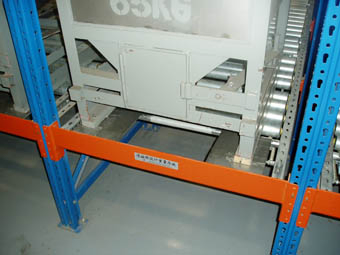
 Okapi Logistics