Okapi Logistics Okapi Logistics

Top 10 Logistics Risks and How to Mitigate Them

Time:2026-09-27 Author:Ethan
0%

Logistics keeps products moving, but every handoff creates an opportunity for delay, damage, or loss. A missed barcode scan can leave a pallet invisible for hours. A late truck can disrupt production, retail shelves, and customer promises. Weather, supplier failures, cyber incidents, labor shortages, and inaccurate inventory data can also expose weak points.

What Are The Risks In Logistics Operations And How To Mitigate Them is not a question with one universal answer. Effective risk management requires practical experience, accurate data, and regular review. Warehouse teams can reduce errors through cycle counts, clear labeling, documented procedures, and routine equipment inspections. Transport managers can improve resilience by qualifying carriers, tracking deliveries, and preparing realistic backup routes. Temperature-sensitive goods need calibrated sensors, alarm thresholds, and records that people actually check.

Small details matter.

A sealed trailer, a readable label, and a confirmed delivery time can prevent expensive problems. However, controls often fail when employees work under pressure or when managers trust outdated assumptions. No control is perfect. A backup supplier may face the same storm. A tracking system may report movement without proving product condition. This article examines the top ten logistics risks and practical ways to mitigate them. It focuses on actions that support safety, continuity, accountability, and measurable improvement. The goal is not to promise risk-free operations. That promise would be unrealistic. The goal is to help logistics leaders identify weak points earlier, respond faster, and build processes that remain reliable during ordinary disruptions and unexpected events.
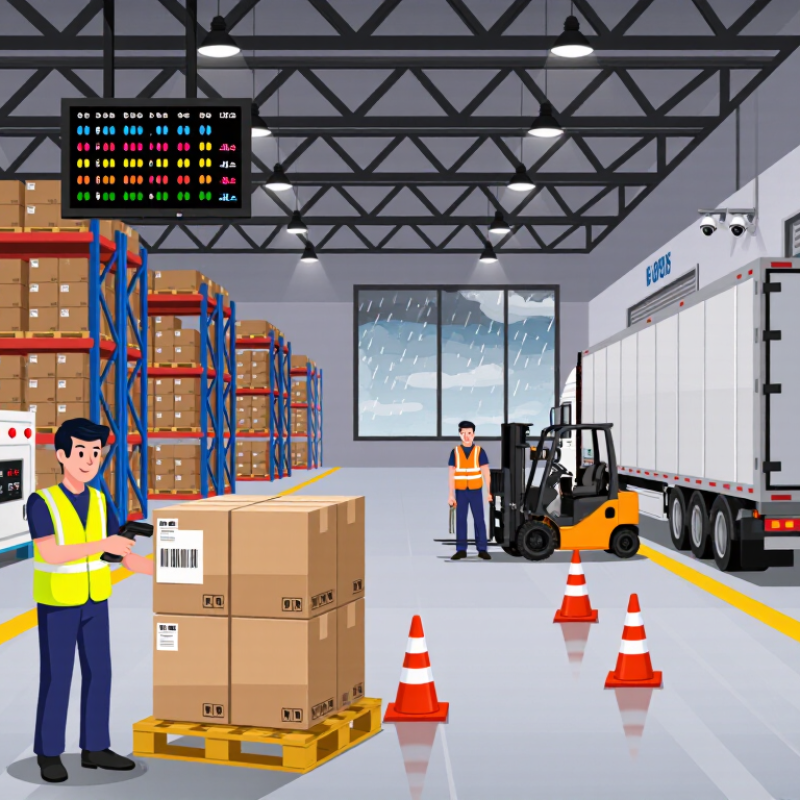
Top 10 Logistics Risks and How to Mitigate Them

Understanding the Main Categories of Logistics Risk

Logistics risk is not one problem with one solution. It spans the movement of goods, the information behind each shipment, and the decisions made when plans change. A delayed truck may be a transport risk; missing stock data can turn the same delay into an operational crisis. Small disruptions travel.

Transport risks include congestion, severe weather, equipment failure, and limited carrier capacity. Supply risks arise when a key material comes from one source or arrives later than promised. At a warehouse, staffing gaps, inaccurate counts, or damaged handling equipment can interrupt daily operations. Demand risk works in the opposite direction: forecasts may overstate sales, leaving pallets idle, or underestimate them, creating empty shelves. These categories overlap more than neat diagrams suggest.

Financial and compliance risks also deserve attention. Fuel price swings, currency movements, changing import requirements, or incomplete shipment records can increase costs and delay delivery. A practical review tracks warning signs, not just past losses: supplier lead-time changes, repeated picking errors, or rising damage claims. Clear escalation steps help teams respond before a small issue spreads.

Keep a backup plan.

No risk register is complete. Teams may overlook a weak link because it has worked for years; that deserves a second look. Test contingency plans against specific scenarios, such as a closed road or a sudden inventory mismatch. Record what failed, and revise the plan.

Do it regularly.

Identifying the Top Ten Risks Across the Supply Chain

Top 10 Logistics Risks and How to Mitigate Them

Identifying the Top Ten Risks Across the Supply Chain

Supply chains face ten recurring risks: demand swings, dependence on one supplier, inconsistent quality, transport delays, port congestion, inaccurate inventory, cyber outages, labor shortages, severe weather, and documentation errors. A delayed component can leave a factory line idle, while inaccurate stock records may trigger needless emergency orders. Map each risk to a specific location, supplier, and product. Then estimate its likelihood and operational impact. Numbers help, but they can create false confidence when assumptions are outdated.

Tips: Keep backup suppliers qualified, not merely listed. Set practical safety-stock levels for critical parts, and review them after demand changes. Track shipment milestones and inventory exceptions in one shared system. Test recovery plans with realistic scenarios, such as a closed distribution center or a week-long software outage. Assign a named owner to every major risk.

Build simple triggers for action: repeated late deliveries, rising defect rates, or stock below a defined threshold. Check supplier capacity and quality regularly, and verify shipping documents before dispatch. Review weather exposure and alternate routes before peak seasons. A risk register often looks tidy on screen. It may still miss what warehouse staff see each morning, so ask them what is failing.

Assessing Risk Severity, Probability, and Operational Impact

A useful logistics risk assessment separates severity, probability, and operational impact. Severity measures the potential harm; probability estimates how likely the event is; operational impact shows what may stop, slow, or cost more. Score each from one to five, but define the scales clearly. A “five” for a missed delivery should mean the same thing to dispatchers and warehouse managers.

Consider ten common risks: supplier delays, transport disruption, severe weather, inventory errors, equipment failure, labor shortages, damaged goods, inaccurate forecasts, cyber incidents, and customs delays. A low-probability event can still deserve attention if it could halt a critical shipment. For example, a single failed refrigeration unit may threaten an entire temperature-sensitive load. Check incident records, supplier lead times, route conditions, and equipment maintenance logs; estimates based only on memory are often shaky.

Use a risk register that names an owner, trigger, and response for each item. A high-impact route disruption might require an alternate carrier and a customer update within two hours. A recurring stock discrepancy may call for cycle counts and barcode checks. Keep the plan practical. “Monitor closely” is not a response. Review scores after disruptions and test whether controls work under pressure. Some ratings will be wrong at first; document why, then revise them rather than defending a neat-looking spreadsheet.

Top 10 Logistics Risks and How to Mitigate Them - Assessing Risk Severity, Probability, and Operational Impact

Risk ratings are qualitative planning assessments. Actual likelihood and impact vary by route, mode, product, season, supplier, and operating conditions.

# Logistics Risk Severity Probability Operational Impact Practical Mitigation
1 Severe weather and natural disasters High Medium Route closures, port or airport shutdowns, damaged infrastructure, and extended delivery delays. Monitor weather and official advisories; identify alternate routes and gateways; maintain contingency plans and appropriate inventory buffers for critical goods.
2 Geopolitical disruption and trade restrictions High Medium Border delays, restricted access to markets, rerouting, added compliance work, or inability to move certain goods. Review applicable sanctions, export controls, and customs rules; diversify sourcing and routes where feasible; prepare compliant alternatives and escalation procedures.
3 Port congestion and transport capacity constraints High Medium Longer transit times, missed connections, higher storage or demurrage costs, and reduced schedule reliability. Book capacity early for predictable peaks; track congestion and dwell times; consider alternate ports, modes, or sailing schedules; coordinate forecasts with carriers.
4 Supplier failure or disruption High Medium Material shortages, production stoppages, incomplete orders, and delays that can propagate across the supply chain. Assess supplier continuity and financial exposure; qualify alternative suppliers where practical; monitor lead times and capacity; set clear recovery and communication plans.
5 Cyberattack or logistics-system outage High Medium Loss of shipment visibility, booking or warehouse interruptions, unavailable records, and delays in dispatch or clearance. Use multifactor authentication and access controls; maintain tested backups and incident-response procedures; verify supplier security practices; establish manual fallback processes.
6 Customs, documentation, or regulatory non-compliance High Medium Shipment holds, inspections, fines, storage costs, or rejection at the border. Validate classification, origin, valuation, permits, and shipping documents before dispatch; use current destination requirements; retain auditable records and train relevant staff.
7 Cargo theft, loss, or tampering High Low to Medium Product loss, replacement expense, delayed fulfillment, investigation costs, and potential safety or security concerns. Apply risk-based route and carrier selection; use secure loading and seals where appropriate; limit unnecessary stopovers; track high-value shipments and report anomalies promptly.
8 Fuel-price volatility and transport-cost increases Medium High Unplanned freight-cost increases, budget pressure, and reduced margin or service flexibility. Review fuel-surcharge terms and cost drivers; improve load utilization and route planning; compare feasible transport modes; include cost scenarios in budgets and pricing decisions.
9 Labor shortages, strikes, or work stoppages High Medium Reduced warehouse, port, or transport capacity; slower handling; backlogs; and disruption to scheduled deliveries. Track labor and service advisories; cross-train staff for critical tasks; establish continuity arrangements; plan alternate facilities or routes when operationally and legally feasible.
10 Temperature excursions or product damage High Low to Medium Reduced product quality, spoilage, rejected shipments, regulatory concerns, and costly replacement or disposal. Use packaging and equipment suited to the product’s handling requirements; monitor and record conditions; qualify handling partners; define excursion response and acceptance procedures.

Applying Practical Measures to Prevent and Reduce Logistics Risks

Top 10 Logistics Risks and How to Mitigate Them

Applying Practical Measures to Prevent and Reduce Logistics Risks

Logistics disruptions often begin with small gaps: an outdated delivery estimate, a damaged pallet, or missing stock data. Map each handoff, from warehouse dispatch to final delivery, and name the person responsible for checking it. Use a shared schedule that records shipment status, expected arrival times, and exceptions. Small gaps matter. Review supplier capacity and carrier performance regularly, rather than relying on last year’s results. Keep backup routes and alternative transport options documented, with clear triggers for using them.

Protect goods through suitable packaging, loading checks, and simple temperature or moisture monitoring where cargo requires it. Photograph unusual damage before moving affected items, and record quantities against the packing list. Build inventory buffers for critical products, but avoid excessive stock that ties up space and cash. Plans still fail. A spreadsheet may be out of date, and a backup carrier may have limited capacity during peak periods. Test contingency plans with realistic scenarios, such as a missed collection or a warehouse outage. After each disruption, review what happened with the people closest to the work. Their practical observations can reveal weak assumptions that dashboards miss.

Monitoring Controls and Improving Logistics Risk Management

Logistics risk management works best when controls are visible in daily operations. A shipment can appear on schedule while a missed scan hides a growing delay. Track practical signals such as delivery variance, temperature readings, damaged cartons, and time spent at handoff points. Set clear thresholds, then assign someone to review exceptions each shift. Alerts without owners become background noise.

Keep records useful and specific. For a delayed pallet, note the location, time, carrier update, and next action in one shared log. Review recurring patterns weekly, not only after a major disruption. A rise in late warehouse departures may point to staffing gaps or an unrealistic cutoff time. The data can still mislead, though; teams should verify unusual results before changing procedures. Small checks matter.

Tips: Test one alert at a time. Walk the route with staff and compare system timestamps with what actually happens. Keep a simple backup process for scanner or network outages, and rehearse it during a quiet shift. Ask employees which alerts they routinely ignore. That answer may be uncomfortable, but it often reveals where monitoring controls need adjustment.

FAQS

What are the main categories of logistics risk?

They include transport, supply, warehouse operations, demand, financial, and compliance risks. These categories often overlap.

How can a small transport delay become a larger problem?

Missing stock data may hide the delay’s impact, turning a late truck into an operational crisis. Small gaps spread.

What warning signs should teams monitor?

Watch for changing supplier lead times, repeated picking errors, rising damage claims, and inaccurate inventory counts.

How can teams prepare for transport disruptions?

Document backup routes and alternative transport options. Set clear triggers for when to use them.

How can warehouses reduce damage and inventory errors?

Check loads, use suitable packaging, and compare item quantities with the packing list. Photograph unusual damage.

How much safety stock should a business keep?

Build buffers for critical products, but avoid excess stock that ties up space and cash. The right level may need review.

What should a practical logistics plan include?

Map each handoff and assign someone to check it. Record shipment status, expected arrival times, and exceptions.

How should teams test contingency plans?

Use realistic scenarios, such as a closed road, missed collection, or warehouse outage. A tidy plan can still fail.

What should happen after a disruption?

Review what happened with the people closest to the work. Their observations may expose assumptions that dashboards miss. A second look helps.

Conclusion

Logistics operations face a range of risks, from transportation delays and inventory shortages to equipment failures, inaccurate forecasts, safety incidents, and disruptions caused by severe weather or supplier problems. Understanding the main categories of risk helps organizations identify where vulnerabilities may arise across the supply chain. Each risk should be assessed by considering its likelihood, potential severity, and impact on service, costs, and day-to-day operations. This structured review clarifies which issues require immediate attention and which can be managed through routine controls.

What Are The Risks In Logistics Operations And How To Mitigate Them? Practical measures include diversifying suppliers and routes, maintaining appropriate inventory buffers, inspecting and servicing equipment, training staff, and preparing clear response plans. Consistent monitoring of delivery performance, stock levels, incidents, and other operational indicators can reveal emerging problems early. By reviewing controls regularly and learning from disruptions, organizations can strengthen resilience, reduce avoidable losses, and improve the reliability of logistics operations.

Ethan

Ethan

Ethan is a seasoned marketing professional with a deep expertise in our company's innovative product line. With a passion for sharing knowledge and insights, he takes the lead in regularly updating our corporate blog, where he explores industry trends, product features, and effective marketing......