Okapi Logistics Okapi Logistics

What Are the Key Trends in Modern Logistics Industry?

Time:2026-10-24 Author:Henry
0%

What Are The Key Trends In Modern Logistics Industry? This question now reaches beyond faster delivery and larger warehouses. Logistics is becoming a data-led, low-carbon, and increasingly automated network. The International Transport Forum’s Transport Outlook 2023 projects that global freight demand could more than double by 2050 under current-policy conditions. That forecast places pressure on ports, roads, energy systems, and urban distribution. The World Bank’s Logistics Performance Index 2023 also shows that reliability, customs, infrastructure, and shipment tracking remain uneven across economies. A parcel may be digitally visible in one city, then become difficult to trace after a border handoff. That gap matters more than impressive software demonstrations.

Modern operators are responding with artificial intelligence, warehouse robotics, predictive maintenance, and real-time control towers. MHI’s 2024 Annual Industry Report identifies strong planned investment in supply-chain innovation, including AI and automation. DHL’s Logistics Trend Radar highlights robotics, alternative energy, and advanced analytics as important forces shaping logistics. Yet adoption is not automatically successful. Algorithms need clean data, trained workers, and accountable decisions. Electric trucks still face charging limits, payload trade-offs, and regional grid differences. Smaller carriers may also lack the capital to copy multinational systems. Forecasts can be wrong. Even so, the evidence points toward practical resilience: diversified suppliers, flexible inventory, transparent emissions measurement, and closer collaboration across carriers, shippers, and public agencies. The most credible trend is not technology alone. It is measurable adaptability.
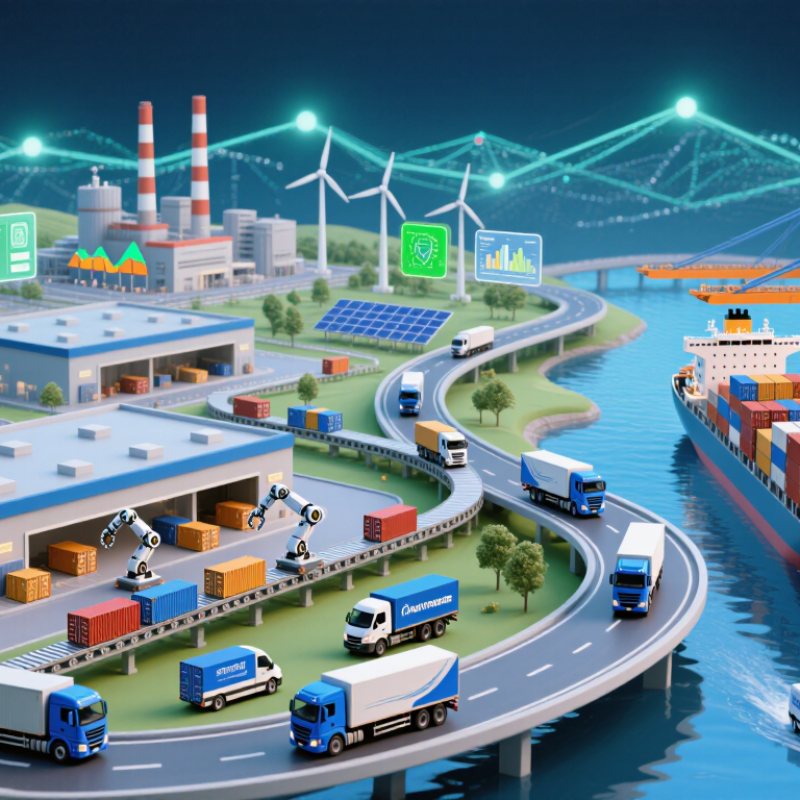
What Are the Key Trends in Modern Logistics Industry?

Defining Modern Logistics and Its Main Driving Forces

Modern logistics is more than moving goods from a warehouse to a customer. It is a connected system that plans, stores, transports, tracks, and delivers products. Information flows alongside physical shipments. Speed matters. A delayed scan can disrupt inventory decisions, delivery schedules, and customer trust.

The main driving force is digital visibility. Sensors, route planning tools, and shared data help teams monitor temperature, location, stock levels, and vehicle capacity. Automation also reduces repetitive handling in distribution centers, although it cannot replace careful maintenance or trained judgment. Customer expectations create another strong pressure. Many buyers want flexible delivery times, accurate updates, and simple returns. These demands reshape warehouse layouts and transport networks.

Sustainability is becoming an operational requirement, not merely a public message. Companies are testing shorter routes, fuller vehicle loads, reusable packaging, and lower-emission transport options. Resilience matters too. Weather events, labor shortages, border delays, and sudden demand changes can expose weak planning. A reliable logistics design needs alternative suppliers, regional inventory, and clear response procedures. Yet technology is not a cure-all. Poor data still produces poor decisions, and faster delivery can increase waste if demand forecasting remains weak. Human oversight remains essential when conditions change quickly.

How Digital Technologies Are Transforming Logistics Operations

What Are the Key Trends in Modern Logistics Industry?

Digital technologies are reshaping logistics operations from the loading dock to the customer’s door. Internet-connected sensors now track temperature, location, vibration, and vehicle condition in real time. Managers can see delays before they become missed delivery windows. Artificial intelligence also improves demand forecasting by comparing sales, weather, and seasonal patterns. However, predictions remain imperfect when data is incomplete or rapidly changing.

Modern warehouse systems connect inventory records, picking tasks, and shipment updates on one operational screen. Automated guided equipment can move cartons across busy floors, while computer vision checks labels and package damage. Route optimization tools reduce empty miles and help dispatchers respond to traffic or weather disruptions. Digital twins can test layout changes before physical work begins. The technology is powerful, but poor integration can create duplicate records, confusing alerts, and expensive delays. Human judgment still matters.

Tips: Start with one measurable problem, such as late picking or inaccurate stock counts. Clean the data before adding advanced analytics. Give workers practical training, not only software instructions. Review automated recommendations weekly, because a system may repeat yesterday’s assumptions. Protect operational data with access controls, regular audits, and clear recovery procedures. Small pilots often reveal more than ambitious technology programs.

Why Sustainability Is Reshaping Transportation and Warehousing

What Are the Key Trends in Modern Logistics Industry?

Sustainability is reshaping transportation and warehousing from the loading dock inward. The International Energy Agency reported that transport produced about 8 gigatonnes of CO2 in 2022. That represented nearly one-quarter of global energy-related emissions. Road freight remains a difficult area. Heavy trucks often travel long distances with strict delivery schedules. Electric vehicles, renewable fuels, route optimization, and rail connections are changing that pattern. The International Energy Agency also reported strong growth in global electric truck sales during 2023, although progress remains uneven across regions.

Warehouses are changing too. Solar panels, efficient lighting, heat pumps, and smart energy systems can reduce daily consumption. A practical facility now measures power use by zone, shift, and equipment type. Small details matter, such as avoiding empty forklift trips or opening loading doors unnecessarily. The World Economic Forum estimated that urban delivery traffic could increase significantly by 2030 without cleaner systems and better planning. This pressure is encouraging shared delivery networks, parcel lockers, and consolidated routes.

The transition is not simple. Batteries require minerals, charging infrastructure costs money, and renewable electricity is not equally available everywhere. Some “green” projects also shift emissions upstream rather than removing them. That deserves honest measurement. The Global Logistics Emissions Council framework supports activity-based calculations using shipment distance, weight, fuel, and vehicle data. Still, many operators lack complete records. Sustainability claims can become vague when measurement remains weak. A cleaner fleet helps, but disciplined data collection may be the harder task.

How Logistics Networks Are Building Greater Resilience and Flexibility

Modern logistics is shifting from lowest-cost routing toward networks that can absorb shocks and recover quickly. The World Bank’s 2023 Logistics Performance Index reports that international supply chains may take up to 44 days from an exporter’s warehouse to an importer’s warehouse. About 60% of this time can be spent at sea or in ports. A delayed vessel can therefore affect factories, retailers, and customers far beyond the original route.

Resilient operators are adding practical flexibility. They qualify secondary suppliers, reserve alternative ports, and keep limited safety stock for critical components. According to UNCTAD’s Review of Maritime Transport, ships carry over 80% of global merchandise trade by volume. This dependence makes port diversification essential. A useful control tower should combine shipment data, weather alerts, inventory levels, and supplier updates. It should also show uncertainty, not only attractive on-time percentages. Sometimes, visibility exposes problems rather than solving them.

Digital scenario planning is becoming more valuable. Teams can test a closed canal, a labor shortage, or a sudden demand spike before making expensive decisions. The World Bank also highlights persistent gaps in tracking and delivery reliability across countries. That gap requires local expertise, not software alone. Resilience can increase costs, emissions, and operational complexity. Companies should measure those trade-offs openly, review assumptions after every disruption, and avoid treating one successful recovery as proof that the network is truly flexible.

Emerging Delivery Models and the Future of the Logistics Workforce

Modern logistics is shifting from one large distribution center to flexible, local networks. Micro-fulfillment sites place fast-moving goods closer to dense neighborhoods. Scheduled delivery is gaining ground for bulky or temperature-sensitive orders. Customers can choose pickup lockers, collection points, or consolidated delivery windows. These models may reduce repeated trips and empty vehicle space. However, convenience can hide higher operating costs. A small hub still needs trained staff, maintenance, and accurate inventory data.

The logistics workforce will not disappear; its tasks will change. Workers may supervise sorting systems, verify exceptions, and maintain delivery equipment. Drivers will need digital skills, route judgment, and customer communication. Warehouse roles may require knowledge of sensors, scanning devices, and basic troubleshooting. Short training modules can help, but training alone is not enough. Shift design, fair workload targets, and clear safety procedures matter every day. A rushed worker can turn a barcode error into a delayed shipment. That risk is often underestimated.

Delivery teams will also work beside semi-autonomous vehicles and ground devices where local rules permit. Human oversight remains essential during storms, access problems, and unusual addresses. Data dashboards can improve planning, yet they may reward speed over safe decisions. This weakness deserves closer review. In operational trials, the best process is rarely the fastest one. It protects workers, respects customer privacy, and adapts when reality disagrees with the screen. The screen is sometimes wrong.

Key Trends in the Modern Logistics Workforce

Projected employment growth in selected U.S. logistics-related occupations, 2023–2033.

What it shows: Logistics roles that involve planning, data analysis, and supply-chain coordination are projected to grow faster than operational material-moving roles. This supports the shift toward technology-enabled delivery models, automation, and digitally managed logistics networks.

Source: U.S. Bureau of Labor Statistics, Occupational Outlook Handbook, employment projections for 2023–2033.

FAQS

What does modern logistics include?

Modern logistics connects planning, storage, transport, tracking, and delivery. Information moves beside every shipment. A delayed scan can disrupt inventory and customer trust.

Why is digital visibility important?

Sensors and shared data show location, temperature, stock levels, and vehicle capacity. Route tools support faster decisions. Poor data still creates poor decisions.

How are customer expectations changing logistics?

Customers want flexible delivery times, accurate updates, and simple returns. These demands influence warehouse layouts and transport networks. Convenience has a cost.

How is sustainability changing transportation?

Operators are testing shorter routes, fuller trucks, rail links, renewable fuels, and electric vehicles. These choices can reduce emissions. Progress remains uneven.

How can warehouses reduce environmental impact?

Facilities can use solar panels, efficient lighting, heat pumps, and smart energy systems. Avoiding empty forklift trips also helps. Small actions matter.

Are cleaner delivery systems always better?

Not automatically. Batteries need minerals, charging stations require investment, and some projects shift emissions upstream. Measurement must include distance, weight, fuel, and vehicle data.

How can logistics networks become more resilient?

Companies can use alternative suppliers, regional inventory, and clear response procedures. Weather, labor shortages, border delays, and sudden demand can expose weak planning. Plans need testing.

What are emerging delivery models?

Micro-fulfillment sites place popular goods near dense neighborhoods. Customers may choose lockers, collection points, or scheduled delivery windows. Local hubs still need accurate inventory.

Will automation replace logistics workers?

The workforce will change, not disappear. Workers may supervise sorting systems, check exceptions, maintain equipment, and solve unusual problems. Human judgment remains necessary.

What skills will future logistics workers need?

Workers may need digital skills, route judgment, customer communication, and basic troubleshooting. Short training helps. It does not solve every workload problem.

Why is human oversight still necessary?

Dashboards can favor speed over safety. Storms, blocked entrances, and unusual addresses require judgment. Sometimes, the screen is wrong. That deserves review.

How should companies judge logistics improvements?

They should compare delivery speed, safety, energy use, emissions, accuracy, and customer experience. Faster is not always better. The best process protects people and adapts.

Conclusion

What Are The Key Trends In Modern Logistics Industry reflects a shift toward smarter, more connected, and customer-focused operations. Modern logistics is being driven by global trade, changing consumer expectations, labor developments, and the need for faster, more reliable delivery. Digital technologies such as artificial intelligence, data analytics, automation, cloud systems, and real-time tracking are helping companies improve planning, manage inventory, reduce delays, and make better operational decisions.

Sustainability is also reshaping transportation and warehousing through energy-efficient facilities, optimized routes, alternative fuels, and waste reduction. At the same time, logistics networks are becoming more resilient by diversifying suppliers, strengthening communication, and using flexible distribution strategies to respond to unexpected disruptions. Emerging delivery models, including shared networks, automated vehicles, and localized fulfillment, are creating new opportunities while changing workforce requirements. Future logistics professionals will need stronger digital, analytical, and problem-solving skills to work effectively alongside advanced technologies.

Henry

Henry

Henry is a dedicated marketing professional with a profound expertise in the company's offerings. With years of experience in the industry, he possesses an impressive understanding of the market dynamics and consumer behaviors that drive success. Henry is committed to sharing his insights through......