What Are The Benefits of Automated Warehousing? The answer is not simply faster picking. Automated warehousing uses technologies such as conveyors, autonomous mobile robots, and automated storage systems to move, store, and retrieve goods. In a busy distribution center, that can mean a robot carrying a tote across the floor while staff focus on exceptions, replenishment, or quality checks. The result depends on how well each system fits the operation.
Industry investment signals growing interest. The 2024 MHI Annual Industry Report, produced with Deloitte, found that 55% of surveyed supply-chain leaders planned to increase technology investment. The report also said 88% expected robotics and automation adoption within five years. These figures indicate momentum, not guaranteed returns. A survey captures intentions; it does not prove that every warehouse will save money or improve service.
The potential benefits include more consistent throughput, better use of storage space, fewer repetitive manual movements, and improved inventory visibility. Automation can also help operations manage peak demand when order volumes rise. The gains are real. But not automatic. Poorly chosen equipment may create bottlenecks, and software integration, maintenance, training, and downtime all affect performance. Even a fast robot cannot fix inaccurate inventory data. This article examines where automation can deliver measurable value, what trade-offs managers should weigh, and how to judge results using practical measures such as order accuracy, labor hours per order, and system uptime. A careful assessment matters more than impressive machinery.
How Automated Warehousing Works
What Are the Benefits of Automated Warehousing?
How Automated Warehousing Works
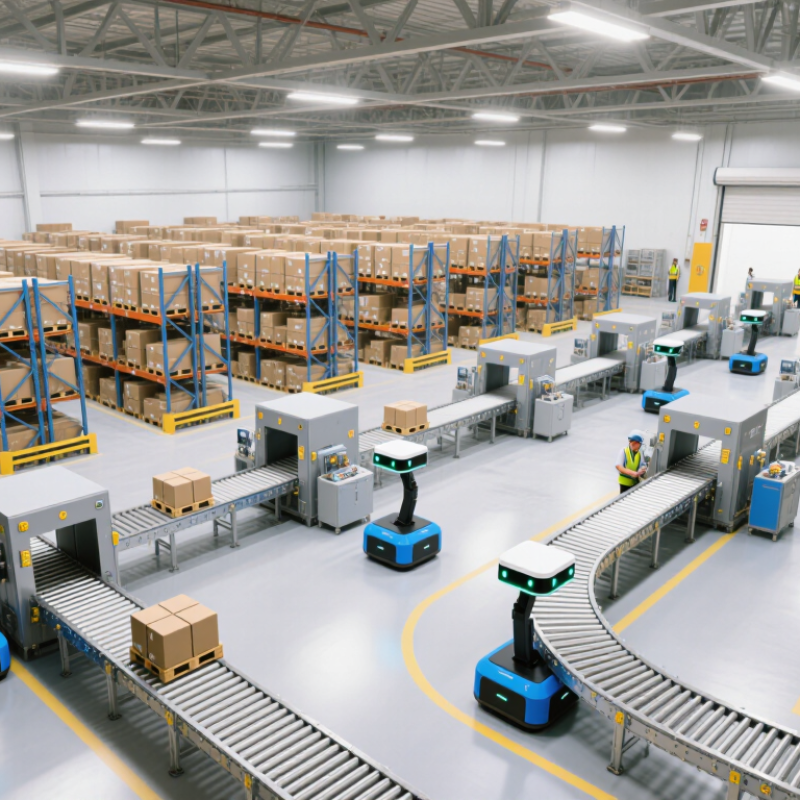
Automated warehousing combines software, sensors, and equipment to move goods through storage and order fulfillment. When a delivery arrives, staff or scanning stations record each item’s identity, quantity, and location. Warehouse software compares this information with open orders and available space. It then assigns storage locations and sends instructions to conveyors, lifts, or mobile robots. A tote might travel from a receiving belt to a shelf, while scanners confirm its route at key points.
Small checks matter.
When an order comes in, the system identifies the required items and directs equipment or workers to retrieve them. Conveyors can carry bins to packing stations, where staff verify quantities, add protective materials, and print shipping labels. Sensors may detect blocked lanes or misplaced goods, prompting a pause or reroute. The system also records inventory changes, helping managers spot shortages and bottlenecks.
Automation can reduce repetitive travel and improve tracking, but it does not remove every source of error. Poor item data, awkward packaging, or a failed sensor can disrupt a smooth workflow.
That gap is worth testing during setup.
Warehouses need clear exception procedures, regular equipment checks, and trained staff who can respond when the software’s plan meets an unexpected package.
How Automation Improves Throughput and Order Accuracy
Automated warehousing improves throughput by keeping orders moving between storage, picking, packing, and dispatch. Conveyors and guided carts can carry totes while staff pick the next items. A warehouse management system can release work in timed batches, reducing crowded aisles and idle stations. On a busy shift, even a few minutes saved between tasks can help clear the day’s queue.
Accuracy improves when each handoff is checked. Scanners can confirm a product’s barcode and storage location before it enters an order tote. At packing, a second scan can catch a wrong size or missing item before the parcel is sealed. Clear screen prompts also reduce reliance on memory. Small checks matter.
These systems work best with clean inventory records and carefully designed workflows. If a barcode is damaged, a shelf is mislabeled, or stock counts are stale, automation can move errors faster rather than prevent them. Exceptions still need trained staff who can inspect a tote, correct a record, and restart the task safely. That takes time. Teams should review error logs and test changes during quieter periods, because a workflow that looks efficient on screen may create bottlenecks at the packing bench.
How Automated Systems Reduce Labor Demands and Workplace Risks
Automated warehousing can reduce the physical strain and time pressure associated with repetitive handling. Robots and conveyor systems can move cartons across long distances, while automated storage equipment retrieves items from high or crowded locations. Workers may spend less time lifting, bending, and making hurried trips through busy aisles. Less lifting. Fewer rushed trips. These changes can reduce exposure to common strains and collisions, especially during peak shifts. Still, the benefit depends on thoughtful system design and realistic staffing plans.
Automation also changes the risks rather than removing them. Moving equipment, pinch points, and unexpected stoppages require clear safeguards, marked pedestrian routes, and accessible emergency controls. Workers need practical training before operating or working near automated systems. Maintenance teams also need safe procedures for inspections and repairs. It is easy to overstate the benefit: a poorly planned layout can create bottlenecks, and a system failure may bring work to a halt. Reviewing incident reports and worker feedback helps identify where protections or workflows need adjustment. Automation can ease demanding tasks, but people still need a safe way to oversee it.
How Automation Optimizes Storage Space and Inventory Control
Automated warehousing can improve storage by coordinating software with physical equipment. A warehouse management system assigns each pallet a location based on size, weight, turnover, and access needs. High-bay cranes and shuttle systems can use vertical space and narrow aisles consistently. The benefit is not simply more racks. It is fewer awkward gaps and less travel between picks.
Investment plans show growing industry interest, though they do not guarantee results. MHI and Deloitte’s 2024 Annual Industry Report found that 55% of respondents planned to invest in robotics and automation over the next five years. Zebra’s 2023 Warehousing Vision Study reported that 87% of warehouse decision-makers planned to increase technology use by 2028. These figures describe intentions, not proven savings. Small distinction. It matters.
For inventory control, barcode or RFID scans can update stock records as goods move from receiving to storage, picking, and dispatch. More accurate location data helps staff find specific cartons and spot discrepancies sooner. Slotting software can also place fast-moving items nearer to packing stations, while slower stock occupies less accessible locations. Still, automation depends on clean product data and sensible rules. A wrong dimension entered once can cause repeated bad assignments. Regular exception checks remain useful, even when the dashboard looks tidy.
What Are the Benefits of Automated Warehousing? — How Automation Optimizes Storage Space and Inventory Control
| Operational Dimension |
Key Measure |
How It Is Measured |
Potential Effect of Automation |
| Storage density |
Usable storage capacity |
Storage locations or inventory volume per unit of floor area |
Can increase |
High-density systems can use vertical space and narrower aisles, subject to building height, equipment, fire-safety, and access requirements. |
| Space utilization |
Occupied storage capacity |
Occupied locations divided by total available locations |
Can improve |
Warehouse software can assign items to suitable open locations and reduce unused or poorly allocated space. |
| Inventory accuracy |
Record-to-count agreement |
Matching system quantities divided by the quantities checked during a physical count |
Can improve |
Barcode or other identification scans, automated transactions, and system-directed moves help keep inventory records aligned with physical stock. |
| Picking travel |
Distance traveled per order or line |
Measured travel distance for a defined set of picking tasks |
Can decrease |
Goods-to-person systems and optimized pick paths can reduce unnecessary walking, depending on the layout and order profile. |
| Order throughput |
Orders or order lines processed per hour |
Completed orders or lines divided by operating hours |
Can increase |
Conveyors, sortation, and automated retrieval can support faster movement and handling when system capacity matches demand. |
| Labor productivity |
Units or lines processed per labor hour |
Completed units or lines divided by labor hours |
Can improve |
Automation can reduce repetitive transport and handling tasks, allowing staff to focus on exception handling, replenishment, and quality checks. |
| Order cycle time |
Time from order release to dispatch |
Elapsed time between recorded order release and dispatch events |
Can decrease |
Coordinated task assignment and automated movement can shorten processing time, provided picking, packing, and dispatch capacity are balanced. |
| Stock availability |
Stockout frequency |
Number of stockout events or unfilled demand lines over a defined period |
Can improve |
Timely inventory updates and replenishment alerts can help teams identify low stock earlier; automation does not eliminate supplier or demand uncertainty. |
| Inventory traceability |
Movement history completeness |
Share of inventory movements recorded with item, location, quantity, and timestamp |
Can improve |
Scanned or system-controlled transactions create a more consistent record of where inventory was moved and when. |
Automation outcomes depend on warehouse design, product characteristics, order patterns, system integration, and maintenance. Compare each measure against a documented baseline using the same definitions and time period.
How Automated Warehousing Supports Scalable Operations and Cost Efficiency
Automated warehousing can help operations grow without adding labor and floor space at the same pace as order volume. Conveyors, storage systems, scanners, and warehouse software coordinate repetitive movement, inventory updates, and picking tasks. A tote arriving at a station, for example, can be directed to an available location while stock records update. Small gains compound.
During peak periods, automation can increase throughput across shifts and reduce walking between aisles. Staff can focus on exceptions, quality checks, and replenishment instead of repeated travel. This may lower the cost per order when demand keeps equipment busy. Utilization matters. A fast system running half empty can cost more than flexible manual processes.
Scalability depends on careful design, not machines alone. Teams should review order patterns, product sizes, seasonal peaks, and bottlenecks before choosing capacity. Modular equipment or configurable picking zones can support phased expansion and limit upfront risk. Maintenance, integration, training, and downtime belong in the cost model, too. Forecasts miss. Leave room for human judgment and recovery when sensors fail or inventory data drifts. Automation can support growth, but it cannot fix every process problem.
Conclusion
What Are The Benefits Of Automated Warehousing? Automated warehousing uses coordinated technologies to move, store, and track goods with less reliance on manual handling. By streamlining tasks such as picking, sorting, and replenishment, these systems can increase throughput and help orders reach customers more accurately. Real-time inventory updates also make it easier to locate products, monitor stock levels, and reduce avoidable errors.
Automation can reduce the physical demands of repetitive work and limit workers’ exposure to certain handling risks, while allowing staff to focus on oversight and problem-solving. More precise storage and retrieval can make better use of available space and support stronger inventory control. As demand changes, automated operations can be expanded or adjusted to handle higher volumes, helping businesses manage costs and scale more efficiently over time.
 Okapi Logistics
