Okapi Logistics Okapi Logistics

2026 Top Facility Planning Considerations for Global Buyers?

Time:2026-09-17 Author:Ethan
0%

Global buyers entering 2026 face a facility planning decision, not merely a construction project. The chosen site must support production, storage, workforce access, utilities, resilience, and future expansion. What Are The Key Considerations In Facility Planning becomes a practical question about risk, cost, and operational evidence.

Deloitte’s 2025 Smart Manufacturing and Operations Survey highlights continued investment in connected systems, data visibility, and operational resilience. These priorities affect factory layouts, network infrastructure, maintenance access, and cybersecurity controls. JLL’s 2025 Global Data Center Outlook also emphasizes power availability, grid constraints, and sustainability pressures. Those lessons extend beyond data centers. A plant with limited electricity, weak cooling capacity, or unreliable roads can lose more than efficiency.

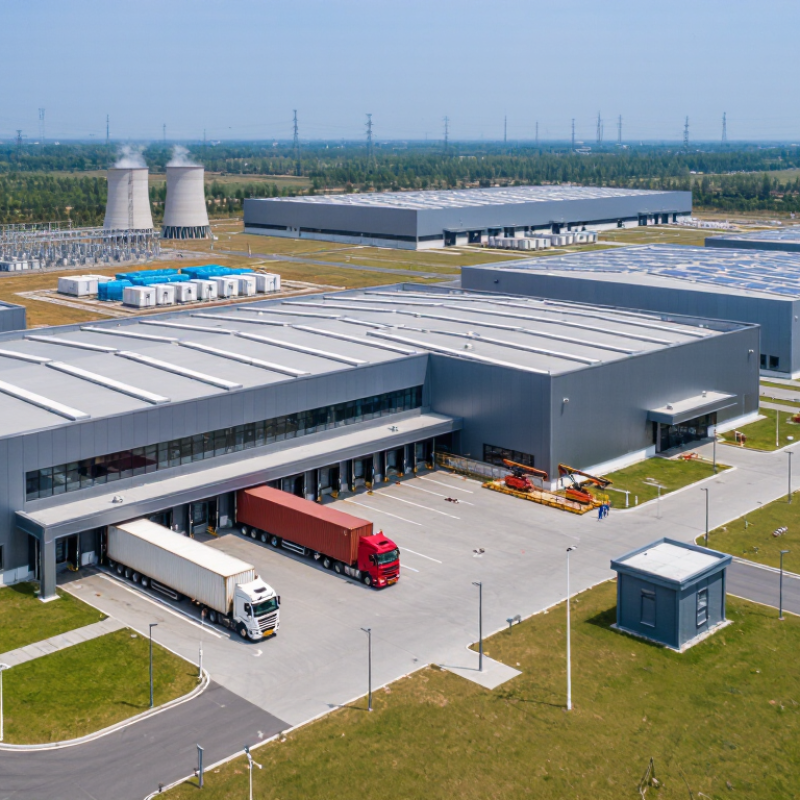
Look closely at the physical details. Can a 40-foot container reach the loading dock without reversing through pedestrian areas? Is there space for a second production line? Can technicians replace a motor without stopping adjacent operations? Small choices become expensive after commissioning.

The International Energy Agency’s Energy Technology Perspectives 2024 underlines the importance of electrification, clean energy, and resilient supply chains. Buyers should therefore compare utility reliability, renewable power access, water availability, and local permitting timelines. Total cost matters more than land price.

No checklist is perfect. That assumption can fail. Demand forecasts change, suppliers miss deadlines, and expansion space disappears quickly. Experienced planners should test multiple scenarios, document their assumptions, and involve operations teams before signing. A credible 2026 facility plan balances measurable data with practical experience, independent verification, and room for uncomfortable questions.
2026 Top Facility Planning Considerations for Global Buyers?

Defining Facility Goals for Global Operations in 2026

Defining Facility Goals for Global Operations in 2026

Facility planning should begin with operational goals, not floor plans. Global buyers need to define capacity, response time, resilience, and expansion limits. The International Energy Agency’s Electricity 2024 report projects data-centre electricity demand could more than double by 2026. Energy availability is now a site-selection issue.

Set measurable targets before comparing locations. For example, specify maximum delivery distance, backup hours, water consumption, and acceptable downtime. A 2024 global risk survey by the World Economic Forum identified extreme weather and critical infrastructure disruption among major business concerns. A raised loading dock, protected equipment rooms, and dual utility routes may matter more than attractive architectural features.

Small details expose weak assumptions. A warehouse may need wider turning space for electric vehicles. A humid coastal site may require stronger corrosion controls. The International Organization for Standardization’s ISO 50001 framework supports energy-performance monitoring, but measurement systems are often added too late. That mistake is expensive.

Plans also need controlled flexibility. Reserve structural capacity for new automation, but avoid buying unused space. Our early projections can be wrong. Demand changes faster than concrete. A practical review every six months can test staffing, energy, safety, and local infrastructure assumptions before expansion decisions become irreversible.

Evaluating Location, Infrastructure, and Market Access

2026 Top Facility Planning Considerations for Global Buyers

Evaluating Location, Infrastructure, and Market Access

A facility location shapes operating costs long after the lease is signed. Experienced planners examine transport routes, labor availability, utilities, and regional climate risks together. A site near a major port may still fail when inland roads flood each season. Request recent utility reliability records, not only promotional estimates. Confirm power capacity, water pressure, backup systems, and internet redundancy before approving the layout. Small details matter. A ten-minute truck delay can multiply across hundreds of weekly shipments.

Infrastructure must support both current production and practical expansion. Measure floor loading, ceiling height, loading-bay access, fire protection, drainage, and equipment movement paths. Reserve space for maintenance areas and safe material flow. Imported machinery may require different voltage, ventilation, or foundation standards. Local engineers should verify these conditions early. Drawings alone can hide expensive problems.

Market access also includes customs procedures, supplier networks, workforce training, and customer response times. Compare several transport scenarios using real seasonal rates and documented transit data. Review local permitting requirements with qualified advisers and record every assumption. Some forecasts will be wrong. That is normal, but ignoring uncertainty is not. A useful plan includes alternative suppliers, flexible storage, and a phased investment schedule. The strongest decision may not be the cheapest site; it may be the location that protects continuity when conditions change.

2026 Top Facility Planning Considerations for Global Buyers? - Evaluating Location, Infrastructure, and Market Access

A comparative planning framework for evaluating industrial and distribution facility locations using publicly available indicators.

Planning Dimension Measurable Indicator Reference Data / Benchmark Why It Matters in 2026 Facility Planning Action
Market Access Regional trade-bloc coverage The European Union has 27 member states; the Regional Comprehensive Economic Partnership has 15 parties; the United States–Mexico–Canada Agreement covers 3 countries; and the Gulf Cooperation Council has 6 member states. The number of markets reachable under a common trade framework can affect landed cost, customs procedures, and inventory positioning. Map customer demand against preferential trade zones before selecting a production or distribution site.
Logistics Performance World Bank Logistics Performance Index The 2023 index evaluates customs, infrastructure, international shipments, logistics competence, tracking and tracing, and timeliness on a 1–5 scale. A strong logistics ecosystem generally supports more predictable inbound materials and outbound delivery performance. Use the latest available national score as a screening tool, then validate performance at the specific port, airport, road corridor, or inland terminal.
Port and Airport Connectivity Distance and access time to gateways For industrial planning, a practical screening threshold is approximately 60–90 minutes to a major seaport or international airport, subject to traffic and border conditions. Travel time, congestion, and border delays can influence safety stock, transport cost, and delivery reliability more than straight-line distance. Model travel time by day and season instead of relying only on map distance; test at least two gateway options.
Electricity Reliability Outage exposure and backup requirement The World Bank Enterprise Surveys measure power outages experienced by firms; results vary materially by country and survey year. Unplanned interruptions can stop automated production, cold-chain operations, data systems, and warehouse equipment. Require site-specific outage records and design dual utility feeds, UPS systems, generators, or battery storage where operationally justified.
Renewable-Energy Access Grid mix, renewable procurement, and emissions reporting The International Energy Agency tracks electricity generation by source and country; renewable shares differ substantially across national grids. Energy sourcing affects carbon accounting, customer requirements, operating cost exposure, and future reporting obligations. Check renewable-power availability, grid connection limits, power-purchase options, rooftop solar potential, and certificate rules.
Industrial Utilities Water, wastewater, gas, and telecommunications capacity Required capacity depends on process type; water-intensive facilities may require industrial-grade supply, treatment, discharge permits, and drought contingency planning. Utility constraints can delay commissioning or limit future expansion even when land and labor are available. Obtain written capacity confirmations from utilities and include expansion rights in the site-selection scorecard.
Labor Availability Working-age population, technical skills, and wage pressure The International Labour Organization publishes labor-force, employment, and productivity indicators; local labor conditions should be validated at metropolitan or provincial level. Recruitment difficulty and turnover can affect ramp-up speed, shift coverage, quality, and automation payback. Assess technician supply, vocational schools, commuting patterns, wage inflation, and training lead time.
Climate and Physical Risk Flood, heat, water stress, wildfire, and seismic exposure The World Bank Climate Change Knowledge Portal and national hazard agencies provide climate and hazard datasets; risk varies by parcel, not only by country. Extreme weather can disrupt transport, utilities, labor availability, insurance, and business continuity. Complete parcel-level hazard screening, elevate critical equipment, protect drainage, and quantify business-interruption exposure.
Customs and Compliance Tariff classification, origin rules, permits, and border documentation The World Trade Organization and national customs authorities publish tariff schedules, trade agreements, rules of origin, and import requirements. A low-cost site can become uncompetitive if customs treatment, product certification, or origin requirements are unfavorable. Review product-level tariff codes and origin rules before committing to the facility’s production or postponement model.
Digital Infrastructure Fixed broadband, mobile coverage, data-center access, and network redundancy The International Telecommunication Union and World Bank provide national connectivity indicators; industrial sites require local availability and service-level validation. Connected manufacturing, warehouse automation, cybersecurity, and real-time shipment visibility depend on resilient networks. Require diverse network routes, tested failover, secure access controls, and sufficient bandwidth for operational technology.
Expansion Flexibility Land availability, zoning, permitting, and modular building potential A practical 2026 screening approach is to reserve approximately 20–30% additional land or floor-area capacity when demand growth is uncertain and expansion is operationally critical. Flexible capacity reduces the risk of relocating after demand, product mix, or automation requirements change. Secure expansion options, compatible zoning, adequate truck circulation, and pre-approved utility corridors before site acquisition.
Data note: Regional trade-bloc figures reflect publicly established membership structures. Logistics indicators are based on the World Bank Logistics Performance Index 2023 framework. Labor, connectivity, climate, energy, and trade information should be validated using the latest country and site-specific datasets before investment approval. Thresholds shown are planning benchmarks, not guarantees of performance.

Planning Sustainable Energy, Water, and Resource Systems

Global buyers are rethinking facility planning around sustainable energy, water, and resource systems. The strongest plans connect these decisions during site selection. The International Energy Agency’s Energy and AI report estimates data centers consumed 415 TWh of electricity in 2024. That demand may exceed 945 TWh by 2030. Grid capacity now deserves the same attention as land cost.

Energy models should test solar generation, battery storage, heat recovery, and backup flexibility. A practical review includes hourly weather data, seasonal loads, and future expansion.

Water planning needs equal discipline. The World Resources Institute’s Aqueduct Water Risk Atlas reports that 25 countries face extremely high water stress annually. These countries represent about one-quarter of the global population.

Facilities should measure water by process, reuse suitable cooling water, and install leak detection near tanks and pipe joints.

Small details matter.

Resource systems also require material traceability. The Global E-waste Monitor 2024 recorded 62 million tonnes of electronic waste in 2022, with volumes projected to reach 82 million tonnes by 2030.

Buyers can specify repairable equipment, recyclable materials, and documented recovery routes. However, fully closed-loop facilities are rarely realistic.

Local infrastructure, maintenance skills, and supplier data may be limited. That weakness should remain visible in procurement reviews. A credible plan records assumptions, tests alternatives, and accepts correction before construction locks decisions in place.

Integrating Smart Technologies, Automation, and Data Security

2026 Top Facility Planning Considerations for Global Buyers

Global facility planning in 2026 requires more than adding connected equipment. Buyers should map how sensors, automated workflows, and security controls will work together across sites. During site assessments, teams often discover that fast machinery cannot compensate for weak network coverage or unclear data ownership. Specify interoperability, local processing, and audit trails before approving layouts. A digital model can test traffic, energy use, maintenance access, and emergency routes before construction begins. Small details matter.

Tips: Ask suppliers to demonstrate failure scenarios, not only normal operation. Require role-based access, encrypted data in transit and at rest, and documented update procedures. Separate operational networks from office systems, then monitor unusual traffic. Keep manual controls available. They remain useful. Train technicians with realistic drills, including sensor errors and internet outages. Do not assume automation removes risk; it often moves risk into software, permissions, and remote support.

Global buyers should examine regional hosting rules, retention periods, and contractor access. Independent security reviews can reveal gaps that sales presentations miss. Yet reviews are not perfect. A clean report may age quickly after a new device or software change. Assign an accountable owner for every critical dataset and require change logs. Measure uptime, response time, false alarms, and recovery performance after launch. Early assumptions may need correction.

2026 Facility Planning Considerations for Global Buyers

Smart technologies, automation, and data security are becoming increasingly important in global facility planning.

The chart uses a 2021 baseline index of 100. Connected IoT devices increased from approximately 12.3 billion in 2021 to 16.6 billion in 2023, industrial robot installations rose from about 526,000 to 541,000, and the global average data-breach cost increased from approximately USD 4.24 million to USD 4.45 million. Values are rounded from publicly reported industry datasets and global studies.

Managing Compliance, Costs, Risks, and Future Expansion

2026 Top Facility Planning Considerations for Global Buyers
Managing Compliance, Costs, Risks, and Future Expansion
Global facility planning in 2026 requires more than comparing land prices. Buyers should map permits, zoning rules, environmental duties, labor requirements, and import procedures before selecting a site.
Local legal counsel and qualified engineers can verify changing requirements. Treat their findings as essential evidence, not paperwork.

Walk the property during normal operations. Check road access, loading space, drainage, power capacity, water pressure, and emergency routes.

Ask utility providers for written connection timelines and upgrade costs. A low purchase price can hide expensive transformer work or delayed approvals.

Build a cost model covering construction, taxes, insurance, maintenance, energy, and currency movement. Keep a contingency reserve. Real projects often exceed early estimates.

Risk planning should include supplier disruption, severe weather, cyber incidents, and workforce shortages.

Use alternate transport routes and protect critical equipment above known flood levels.

Facility layouts should allow extra storage, production lines, and safer pedestrian movement. Expansion space is valuable, but unused land can increase present taxes and security costs.

I have seen teams reserve too little space, then redesign operations within two years. That mistake is avoidable, though not every forecast will be correct.

Review assumptions every quarter. Document decisions, owners, deadlines, and evidence. A practical plan remains flexible when regulations, demand, or infrastructure conditions change.

FAQS

What should global buyers check before choosing a facility location?

Check transport routes, labor availability, utilities, and climate risks together. A nearby port cannot prevent flooded inland roads. Request recent reliability records before deciding.

Why is utility verification important during site planning?

Confirm power capacity, water pressure, backup systems, and internet redundancy. Promotional estimates may hide weak performance. Small gaps become expensive later.

Which infrastructure details can create unexpected construction problems?

Measure floor loading, ceiling height, loading-bay access, drainage, fire protection, and equipment paths. Imported machinery may need different voltage or foundations. Drawings can mislead.

How can buyers compare market access realistically?

Compare seasonal transport rates, documented transit times, customs procedures, supplier networks, and customer response times. Use several transport scenarios. Forecasts will be imperfect.

How should a facility plan for energy and water demand?

Test solar generation, batteries, heat recovery, and backup flexibility with hourly weather data. Measure water by process. Add leak detection near tanks and pipe joints.

What resource practices support more sustainable facility operations?

Specify repairable equipment, recyclable materials, and documented recovery routes. Fully closed-loop systems are rarely practical. Local skills may be limited.

How should automation and smart equipment be evaluated?

Test sensors, automated workflows, network coverage, and manual controls together. Ask suppliers to demonstrate failures, not only normal operation. Fast machinery cannot fix weak networks.

What data-security controls should a modern facility include?

Use role-based access, encrypted data, audit trails, and documented updates. Separate operational networks from office systems. Monitor unusual traffic and review contractor access.

How can buyers manage uncertainty after construction begins?

Record assumptions, assign owners for critical data, and keep change logs. Measure uptime, response time, false alarms, and recovery performance. Early plans may need correction.

Conclusion

For global buyers, What Are The Key Considerations In Facility Planning for 2026? The process begins by defining clear operational goals, including production capacity, workforce needs, service levels, resilience, and long-term growth plans. Location selection should balance access to customers, suppliers, skilled labor, transportation, utilities, and reliable digital infrastructure. Buyers should also assess regional risks, development timelines, total costs, and the ability to expand as market demand changes.

A future-ready facility should include sustainable systems for energy, water, waste reduction, and resource efficiency while maintaining dependable performance. Smart technologies, automation, connected equipment, and secure data management can improve productivity, visibility, and decision-making. At the same time, planning must address safety, environmental responsibilities, permits, operational standards, cybersecurity, budgets, and supply chain uncertainty. By integrating these factors from the beginning, organizations can create facilities that are efficient, adaptable, financially responsible, and prepared for changing global business conditions.

Ethan

Ethan

Ethan is a seasoned marketing professional with a deep expertise in our company's innovative product line. With a passion for sharing knowledge and insights, he takes the lead in regularly updating our corporate blog, where he explores industry trends, product features, and effective marketing......